
Last updated August 25, 2026
Free on-site gate assessment - hinges, posts, and your LiftMaster or Nice gate operator checked before anything is quoted
The assessment is free and the quote is the invoice.

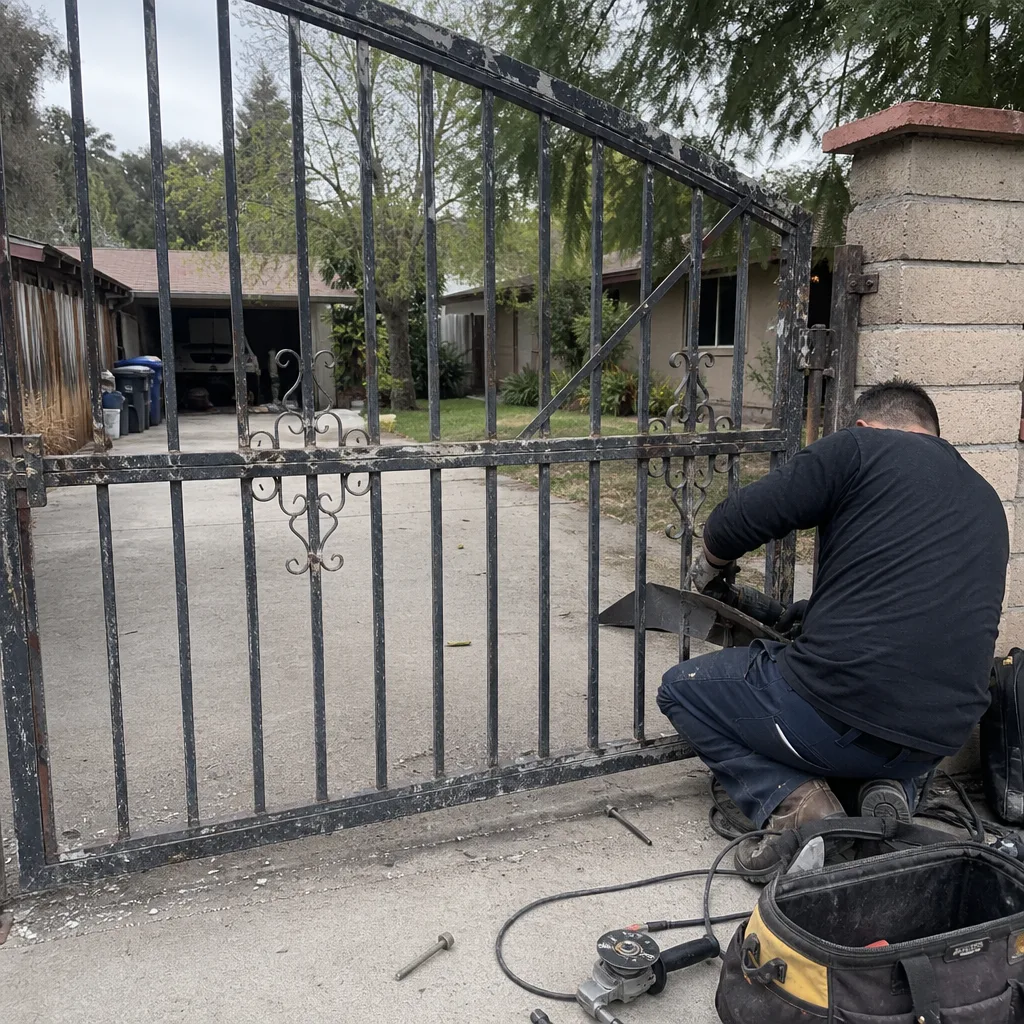 Before
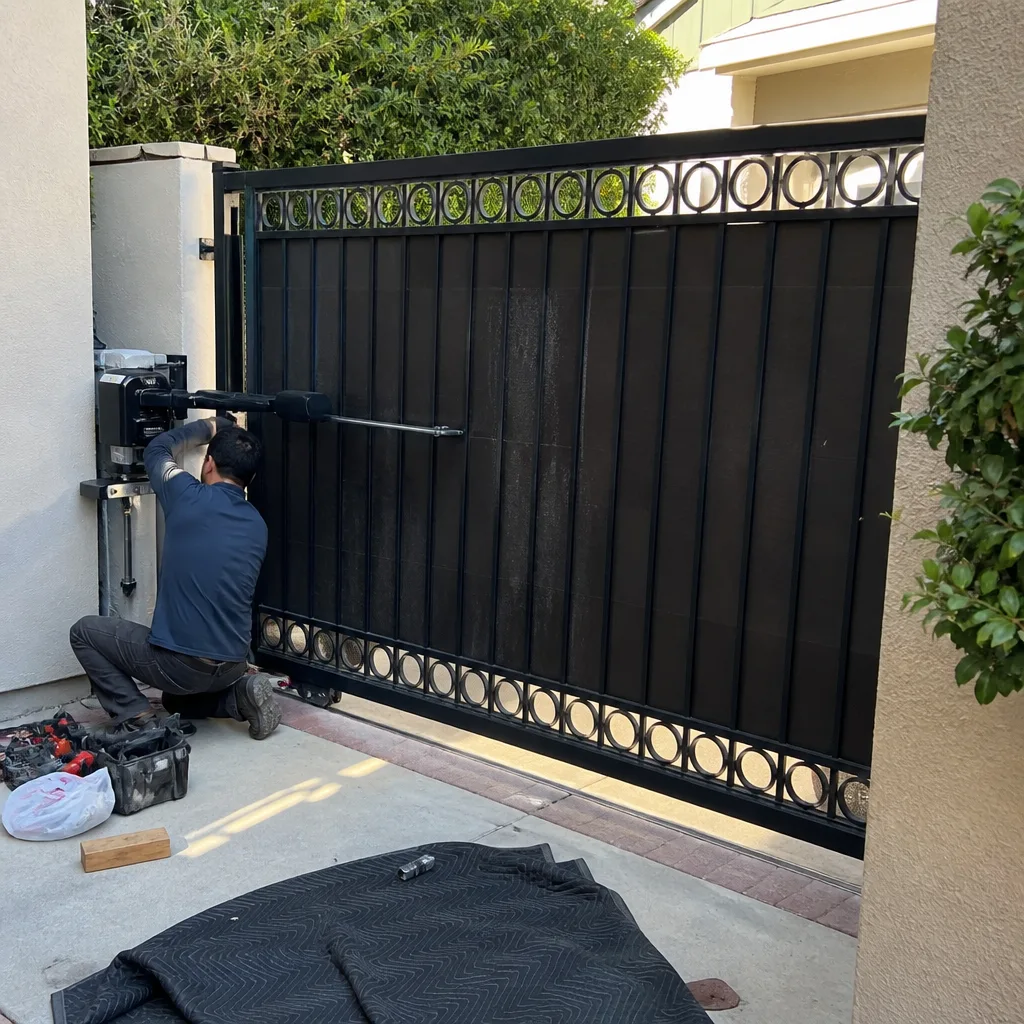 After
After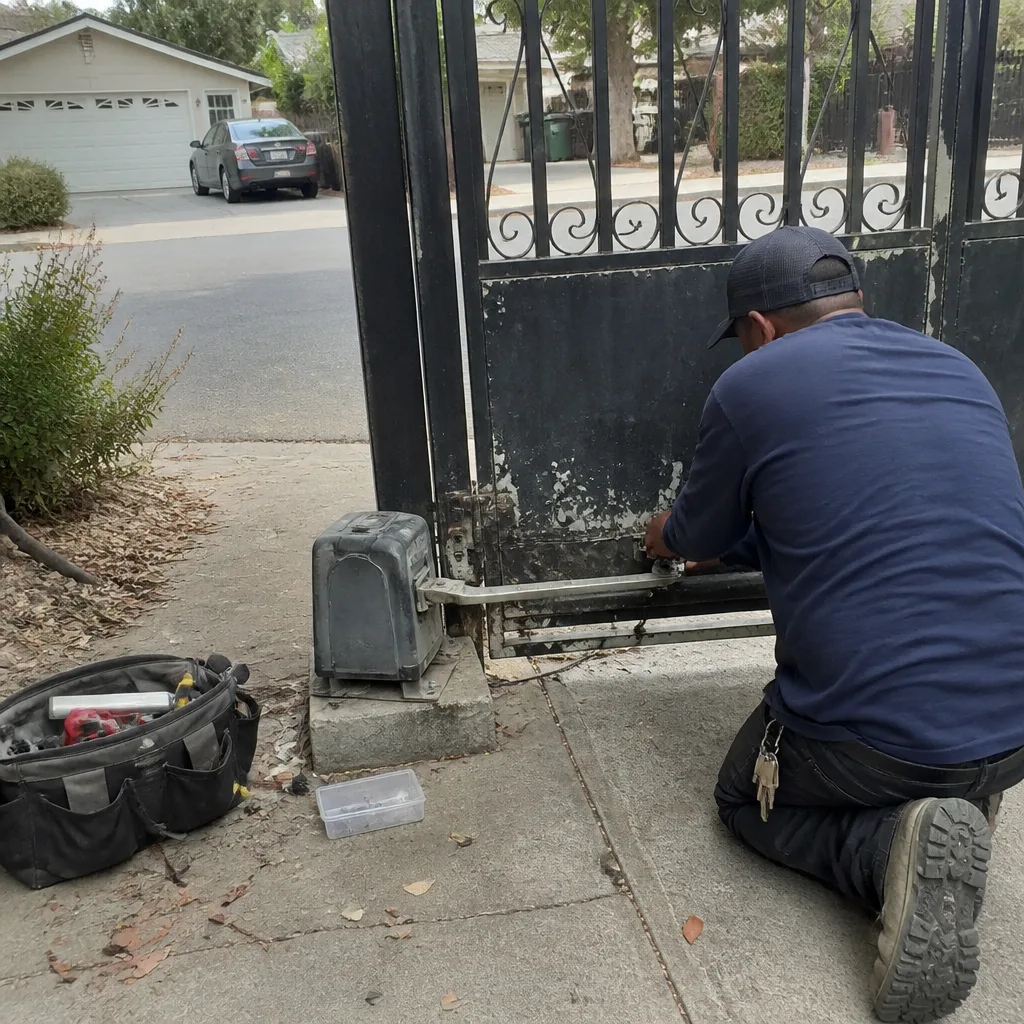 Before
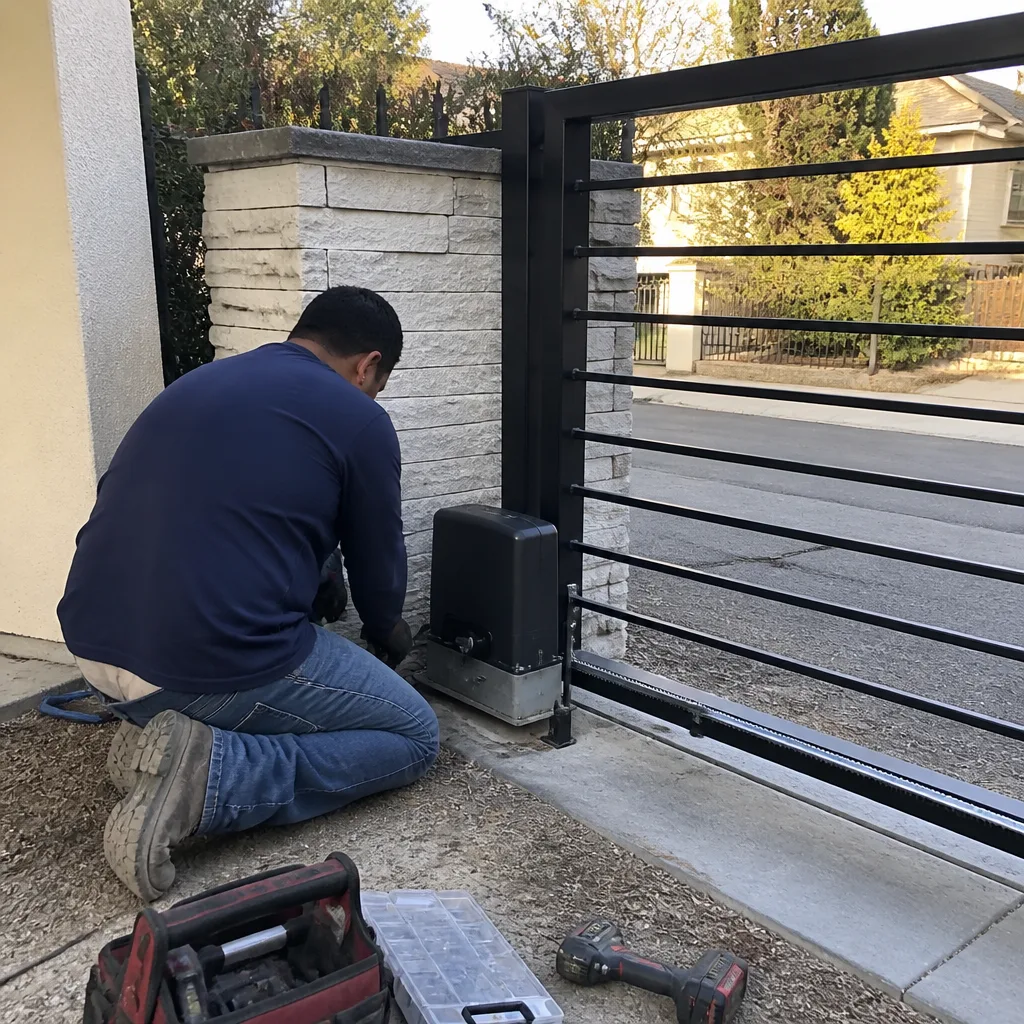 After
After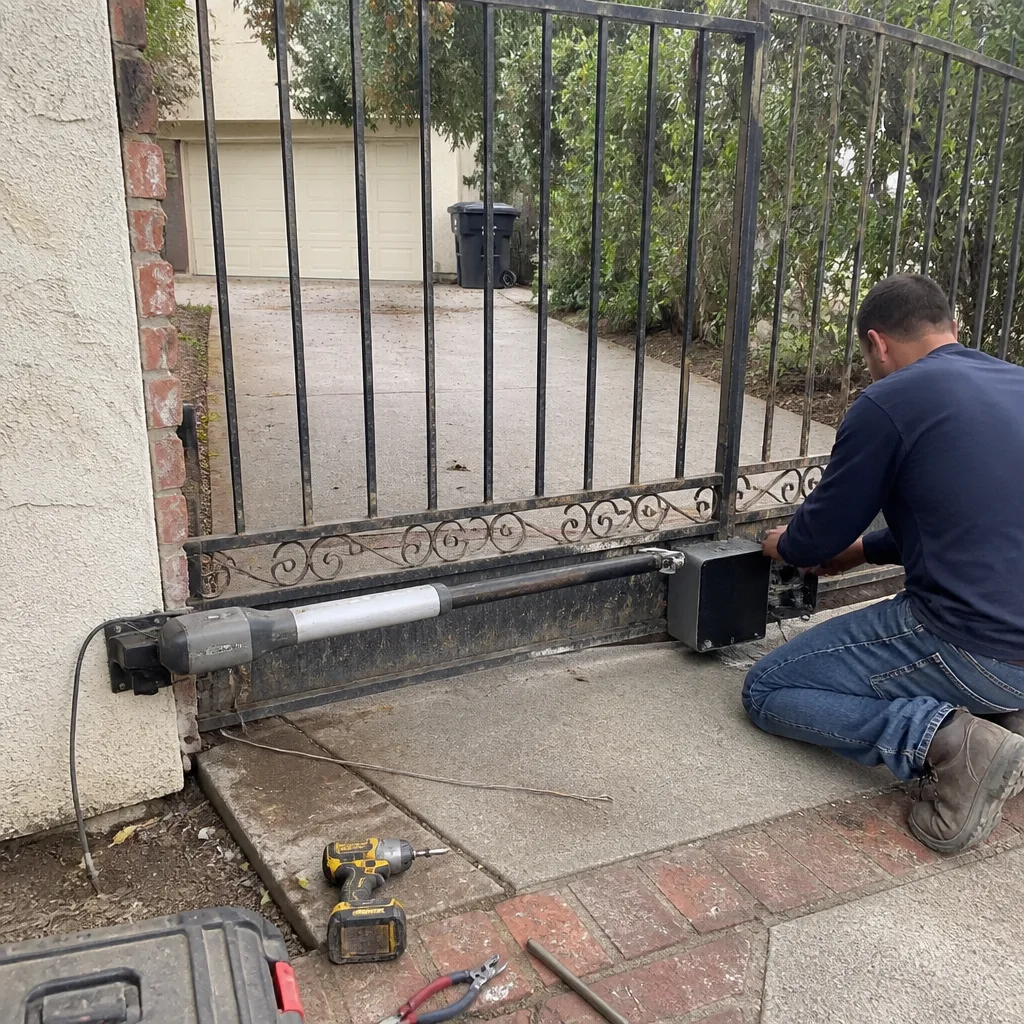 Before
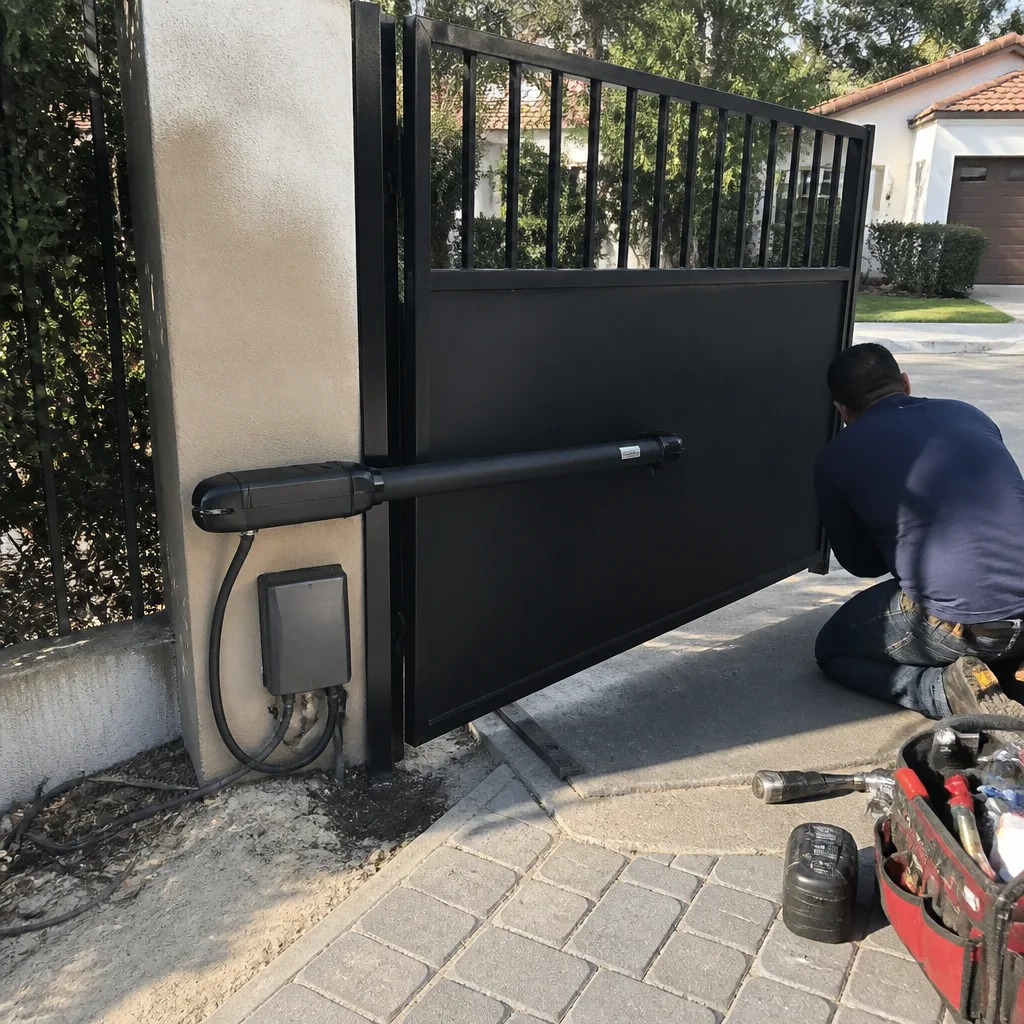 After
AfterGate Repair Permits, Codes & Inspections in CA: What You Need to Know
Most California homeowners discover gate permit requirements at the worst possible moment: standing beside a code enforcement officer who has just posted a notice on their new driveway gate. Here in Tarzana, we get at least three calls a month from people who installed a gate without understanding what the state, county, and city actually require. The rules are not mysterious, but they are specific, and they change depending on whether you are repairing an existing gate, replacing a motor, or building something new. This guide explains what actually applies, what you can ignore, and where the real liability lives. By the end, you will know exactly what questions to ask before anyone picks up a welder.
Quick Answer
Most gate repairs in California do not require a permit. Replacing hinges, welding a cracked post, swapping an opener motor, or installing a new keypad is considered maintenance. Permits enter the picture when you build a new gate, move gate posts, pour new footings, run new electrical lines, or change the height or setback. If the work stays within the original footprint and does not touch the electrical panel, you are usually in the clear.
Table of Contents
- When a Permit Is Actually Required
- When No Permit Is Needed (Repairs vs. New Work)
- California Building Code: What It Says About Gates
- Safety Sensors and Entrapment Protection Requirements
- Electrical Permits: The Part Everyone Overlooks
- Inspections: What Gets Checked and What Gets Missed
- Common Mistakes to Avoid
- When to Call a Professional
- Frequently Asked Questions
- The Bottom Line
When a Permit Is Actually Required
California does not have a single statewide gate permit. The California Building Code (CBC) sets the technical standards, but enforcement happens at the city and county level. In Los Angeles County, which includes Tarzana, that means the Los Angeles Department of Building and Safety (LADBS) has jurisdiction. LADBS requires a building permit for any gate that meets one of these conditions:
- New gate installation where posts are set in new concrete footings
- Any gate exceeding 7 feet in height
- Changing the gate’s location, width, or setback from the property line
- Installing a pedestrian gate that swings over a public sidewalk or right-of-way
- Adding a new electrical circuit for gate automation
- Installing a gate across a shared driveway or easement
The height rule catches more Tarzana homeowners than anything else. A standard 6-foot driveway gate is routine, but the moment you spec an 8-foot estate gate, you are in permit territory. We see this regularly in neighborhoods south of Ventura Boulevard where lots are larger and homeowners want more privacy. The permit is not expensive relative to the gate itself, but the plans, engineering review, and inspection add time to the project. A homeowner who knows this up front is never surprised.
When No Permit Is Needed (Repairs vs. New Work)
The line between repair and new work is where most confusion lives. California building departments draw that line at the point where you are changing the structure or the use. Here is what falls on the no-permit side:
- Replacing gate hinges, rollers, wheels, or track
- Welding a cracked gate frame or post (as long as the post stays put)
- Replacing a gate opener motor with a like-for-like unit
- Installing or replacing a keypad, intercom, or loop detector
- Adjusting gate travel limits, force settings, or sensor alignment
- Replacing a gate panel with identical dimensions and weight
- Installing a battery backup or solar panel on an existing opener
Here in Tarzana, the most common repair we handle is a swing gate that has sagged on its hinges. The homeowner often assumes the post needs to be reset, which would trigger a permit. In most cases, the hinge was never sized for the gate’s weight, and welding a stronger hinge plate to the existing post solves the problem permanently. That is repair work. No permit, no inspection, no delay. Knowing the difference can save a homeowner thousands of dollars and weeks of waiting.
California Building Code: What It Says About Gates
The California Building Code addresses gates in a few specific places, and each one exists because someone was injured or killed. The two most important sections for driveway gates are CBC Section 3110 (vehicle gates) and the electrical requirements in the California Electrical Code (CEC) for gate operators. UL 325 is the national safety standard that governs gate operator design, and California enforces it through the CBC.
The code requires that every automated gate have a means of detecting an obstruction and reversing direction. For swing gates, that means either contact sensors (edges that feel pressure) or non-contact sensors (photo eyes that see an object in the path). For sliding gates, the same applies, plus the gate must not be able to derail if a wheel or roller fails. These are not suggestions. A gate that crushes a child or a pet is a wrongful death lawsuit, and the first question attorneys ask is whether the gate met UL 325 at the time of installation.
In Tarzana, where many homes have gates that were installed in the 1980s and 1990s, the original installation often predates current sensor requirements. A repair that touches the opener can trigger the requirement to bring the safety system up to current code. That is not a money grab. It is the law, and a competent gate company will explain it before doing the work.
Safety Sensors and Entrapment Protection Requirements
Entrapment protection is the single most important code requirement for automated gates, and it is also the most frequently overlooked. UL 325, which California adopted, requires two independent means of entrapment protection on every automated gate. One of them must be inherent to the operator itself, like a force sensor that detects resistance and reverses. The other must be external, like a photo eye mounted across the gate opening or a contact edge on the leading edge of the gate.
Here is what homeowners in Tarzana need to understand: a gate opener that reverses when it hits something hard is not sufficient. By the time the gate has made contact, a small child or a dog has already been injured. Photo eyes that detect an object before contact are the standard, and they are required on both sides of the gate for slide gates. For swing gates, the photo eye goes on the side where the gate closes.
Testing these sensors is part of any legitimate gate maintenance visit. We check the photo eyes with a test object, verify the force setting is low enough to reverse on contact with a child, and confirm the warning placards are in place. The placards are a code requirement, and a missing placard is a violation even if the sensors work perfectly. It sounds minor, but inspectors cite it.
Electrical Permits: The Part Everyone Overlooks
A homeowner can repair a gate with no permit and no electrical work, then discover they needed an electrical permit for the new transformer or the added circuit. In California, any new electrical circuit, any change to an existing circuit, or any new electrical outlet requires an electrical permit. Running a new line from the main panel to a gate opener is new electrical work, full stop. It is the rare gate company that tells a homeowner this before starting, which is why so many Tarzana gates have extension cords buried under the lawn.
The correct installation uses conduit, properly sized wire, and a dedicated breaker in the main panel. A licensed electrician or a licensed gate contractor with a C-61/D-28 classification does the work and pulls the permit. The inspection happens after the wire is in the ground but before the trench is backfilled, so the inspector can see the conduit and the grounding. Skipping this step means an unpermitted electrical system that can complicate a future home sale.
Low-voltage systems are different. Most gate opener control wiring, keypad wiring, and loop detector wiring runs at 12 or 24 volts. No electrical permit is needed for low-voltage work, which is why a homeowner can legally replace a keypad with no inspection. The line is the transformer: connecting a new transformer to 120-volt house power is line-voltage work and requires the permit. The distinction is simple, and a good gate company knows it cold.
Inspections: What Gets Checked and What Gets Missed
When a gate does require a permit, the inspection is not a rubber stamp. LADBS inspectors in the Tarzana area check specific things, and the list is shorter than most homeowners expect:
- Footing depth and size. Gate posts set in concrete must be below the frost line and sized for the gate’s wind load. The inspector verifies the footing diameter and depth before concrete is poured.
- Setback from property line. A gate cannot swing over a neighbor’s property or a public sidewalk. The inspector measures from the gate’s swing path to the property line.
- Height compliance. The gate height must match the approved plans. A 7-foot gate approved at 6 feet fails inspection.
- Electrical rough-in. If conduit and wire are new, the inspector checks the conduit size, wire gauge, and grounding before backfill.
- Operator safety. The inspector verifies photo eyes, contact edges, force settings, and warning placards on automated gates.
What gets missed is just as important. Inspectors rarely test the gate’s weight balance, hinge alignment, or whether the opener is the correct horsepower for the gate’s size. A gate can pass inspection with a motor that is undersized for the job, which will burn out in eighteen months. That is why the inspection matters, but it is not a substitute for competent installation. The inspector confirms code compliance. The installer is responsible for whether the gate works correctly for years.
Common Mistakes to Avoid
- Assuming all gate work needs a permit. Most repairs do not. Hiring a contractor who “will handle the permit” for a hinge replacement means you are paying for paperwork that does not exist.
- Assuming no gate work needs a permit. The opposite mistake is worse. New posts, new footings, new electrical circuits, or a taller gate without a permit creates liability that follows the property forever.
- Burying extension cord instead of running conduit. This is the most common shortcut we find in Tarzana. It corrodes, it fails, and it creates a shock hazard. It also fails inspection instantly.
- Installing a gate operator with no photo eyes. An opener that reverses on contact is not code-compliant. An entrapment injury with a non-compliant gate is indefensible in court.
- Not checking setback before choosing a swing gate. A gate that swings over the sidewalk or a neighbor’s driveway is a violation, and fixing it means moving posts at significant expense.
- Buying a taller gate because a neighbor has one. LADBS grandfathered the neighbor’s gate. A new 8-foot installation on your property needs a permit, regardless of what is next door.
- Waiting to ask about permits until the project is underway. The time to ask is before the estimate. A contractor who cannot answer the permit question clearly is not the right contractor for the job.
When to Call a Professional
Any gate that involves line-voltage electrical work, new footings, or a change in height or setback is a job for someone who does this every day. The same is true for any automated gate that has lost its entrapment protection, whether the photo eyes are dead, the force setting has drifted too high, or the contact edges are cracked. A gate that does not reverse when it meets resistance is a liability, and the fix needs to be done correctly, not creatively. If a gate is sagging badly or the opener is grinding, a professional can tell you in one visit whether it is a repair or a replacement, and whether a permit is involved. Ironworks Gate Co. home offers free estimates in Tarzana, and our technicians will walk you through exactly what your project needs before any work begins. Call (925) 263-6107 to schedule a visit.
Frequently Asked Questions
No permit is required to replace a gate opener with a like-for-like unit, as long as the electrical connection to the existing circuit is unchanged. Most gate opener replacements in Tarzana are same-day jobs that need no city approval. If the replacement requires a new electrical circuit, the electrical portion needs a permit. Call (925) 263-6107 and we will tell you exactly where your project falls.
Gate permit fees in Los Angeles County typically run between $300 and $900 depending on the gate’s size, height, and whether electrical work is included. Tarzana falls under LADBS jurisdiction, and the fee covers plan review and inspection. The total cost is a fraction of the liability you avoid by doing the job legally.
Yes, but it requires a permit and an engineering review. The 7-foot threshold in the California Building Code triggers additional requirements, including wind load calculations and possibly a variance depending on your neighborhood’s specific zoning. The LADBS planning department may also limit maximum height based on your specific lot.
Unpermitted work is disclosed during escrow, and it can delay or derail a sale. Buyers can demand the work be permitted retroactively, which means bringing the gate up to current code at your expense. In Tarzana’s competitive real estate market, an unpermitted gate is a negotiation weapon against you. Getting the gate permitted before listing removes that liability.
No annual inspection is required by California law, but UL 325 requires the installer to test entrapment protection at installation, and manufacturers recommend testing twice a year. We recommend a seasonal tune-up, which includes sensor testing, force verification, and placard inspection. Our $89 Seasonal Tune-Up covers all of it for Tarzana homeowners.
Most standard policies cover sudden damage like a vehicle backing into a gate, subject to your deductible. Wear and tear, rust, sagging, and motor failure are maintenance issues and are not covered. Always confirm with your carrier before proceeding. If you have a written estimate, we offer a free second opinion for any Tarzana homeowner.
The Bottom Line
Gate permits in California are straightforward once you know the line: repairs and replacements in the original footprint are maintenance, and everything that changes the structure or adds electrical work is construction. The most expensive mistakes are unpermitted new installations, electrical work done with extension cord and hope, and automated gates without proper entrapment protection. None of these are hard to avoid with a professional who knows the code and respects the process. In Tarzana, the right gate company will tell you the truth about permits before you sign anything, do the work correctly, and stand behind it in writing. That is how it should be done.
Written by Victor Salinas, Owner at Ironworks Gate Co., serving Tarzana since 2013.